For green-building and LEED projects
LEED construction waste recycling in Dallas–Fort Worth
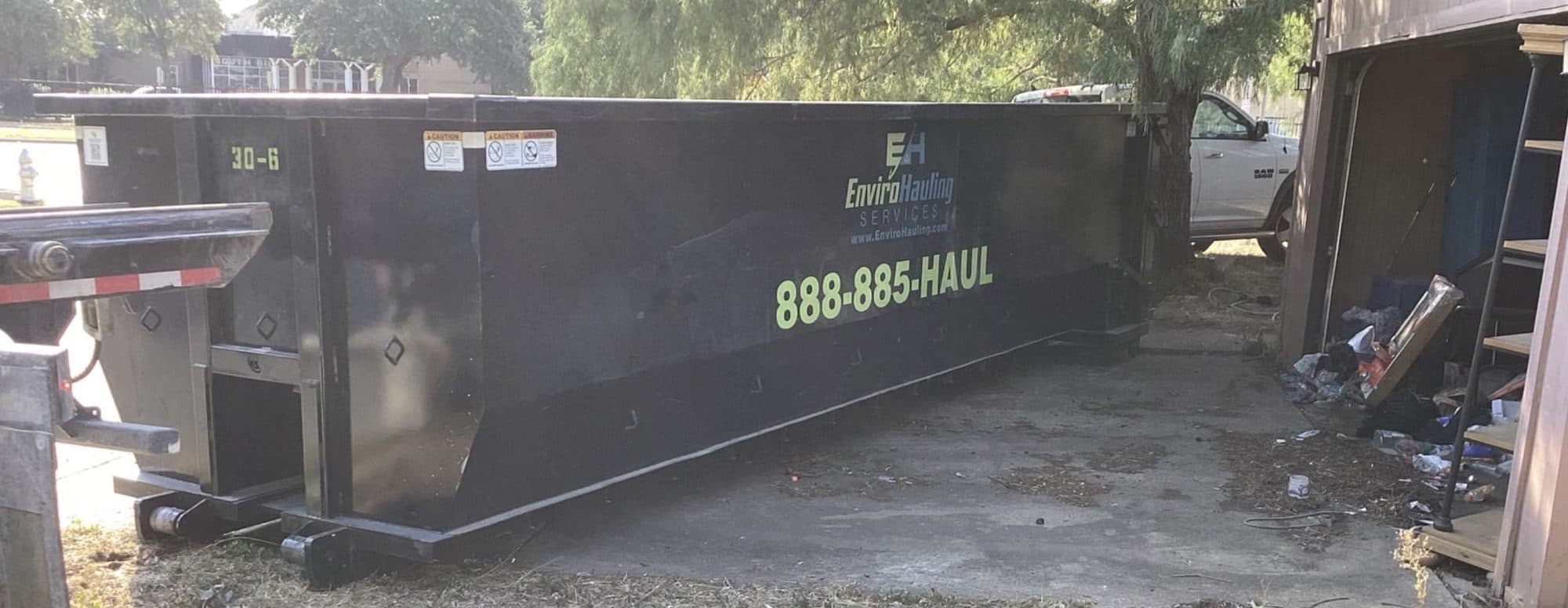
LEED recycling comes down to three things: diverting construction, demolition and occupant waste from the landfill, separating materials at the source, and having dedicated collection in place to do it. EnviroHauling provides that across Dallas–Fort Worth: a roll-off for each material stream during construction, scheduled swaps so separation holds up on a busy site, and recycling and compactor service once the building is occupied.
- Open 7 days, 7am–7pm
- Yards in Justin & Fort Worth
- 5.0★ on Google
- 15 to 40-yard roll-offs, compactors & trailers
What does LEED require for construction waste recycling?
LEED rewards keeping construction and demolition waste out of the landfill. Projects need a waste management plan, and credit points are earned by diverting a set share of project waste across a minimum number of separated material streams, with higher diversion earning more. Thresholds differ between LEED v4, v4.1 and v5, so your LEED consultant confirms the targets for your project's version.
- Plan first: identify the material streams you will divert before demolition or framing starts
- Separate on site: one container per stream keeps loads clean enough to recycle
- Track it: diversion is calculated from the weight or volume of each stream against total project waste
Which materials are usually diverted on a LEED project?
The streams that are easiest to keep clean and have steady recycling outlets: concrete and masonry, scrap metal, clean wood and pallets, cardboard and packaging, and drywall where a recycler accepts it. Each separated stream gets its own roll-off, sized to how much of that material the phase produces.
How do you set up containers for source separation?
We walk through the schedule with your superintendent and size a container for each stream you plan to divert, plus one for mixed waste. Containers are swapped on a schedule matched to each phase, so a full metal box never ends up with drywall thrown on top. Clear labeling on every container helps crews keep streams separate.
What about recycling after the building is occupied?
LEED also looks at occupant waste: a building needs dedicated space and collection for recyclables such as cardboard, paper, plastics, metals and glass once people move in. We can set up that ongoing service with recycling containers, compactors and scheduled pickups, so the building keeps diverting waste after construction ends.
See long-term recycling programs and compactor rental for how ongoing service is set up for occupied buildings.
What documentation will I need for the LEED submittal?
LEED reviewers want the weight or volume of every stream, where each load went, and the resulting diversion rate. Ask dispatch at the start of the project what hauling records and reporting we can provide for your site, so your records line up with the credit requirements from the first load.
What customers say
Reviews from Google
★★★★★
“Every time I've called for a replacement can it's next day. You talk to a live person, not an answering machine. Same person every time you call.”
★★★★★
“They have the best customer service and dispatch. Fast, reliable and cost efficient!”
★★★★★
“Had another great experience at a second location. Punctual, professional, and the whole rental process was hassle-free. Hard to find companies this consistent across multiple jobs.”
5.0 stars across 11 Google reviews. Read them on Google
FAQ
LEED Construction Waste Recycling questions
Can you help with a waste management plan for a LEED project?
Yes. We work with your team on the practical side of the plan: which streams to separate, what containers each phase needs, and the swap schedule. Your LEED consultant owns the credit strategy and final documentation.
Does LEED recycling cost more than a regular construction dumpster?
It can mean more containers on site, but clean, separated streams like metal and concrete are often cheaper to dispose of than mixed debris. Dispatch can compare a separated setup with a single mixed container for your project.
Do you only do this for LEED-certified projects?
No. Any project with a diversion target, a green-building goal or a client who wants less waste in the landfill can use the same setup.
Where we work
LEED Construction Waste Recycling near you
We run leed recycling across Dallas–Fort Worth from our Justin and Fort Worth yards.
Related
Other services
Dumpsters
Construction Dumpsters & Debris Removal
EnviroHauling supplies roll-off dumpsters for construction and demolition sites across Dallas–Fort Worth and hauls the debris away, with scheduled swaps so full containers never stop the job. Builders, remodelers and demolition crews use us for single projects and for ongoing service across multiple sites.
Construction debris detailsRecycling
Long-Term Recycling Programs
EnviroHauling builds long-term recycling programs for businesses and industrial sites across Dallas–Fort Worth. We look at what your site throws away, separate what can be recycled, and put the right containers, compactors or trailers on a schedule so diversion keeps working after the first month.
Recycling programs detailsCommercial
Trash Compactor Rental & Service
EnviroHauling supplies and services commercial trash compactors across Dallas–Fort Worth: self-contained units for wet waste, stationary compactors for high-volume dry waste, vertical units for tight spaces, and pre-crushers for bulky material. We haul and swap the full receivers on a set schedule so the compactor never backs up.
Compactors detailsOpen 7 days, 7am–7pm
Get a leed recycling quote
Tell us where and when, and dispatch will call you back with a price. Fastest of all: call dispatch directly.
Call (817) 368-4210